P3 Group – The Unusual Technology Consultancy Company That Reinvents Itself Every Year
By Mirko Kleiner | Blog Series | August 2026
The future of organizations won’t be shaped by AI alone. At the LAP Alliance, we connect Leadership, New Operating Models, Business Ecosystems, and emerging Technologies to explore what it really takes to thrive in the AI Era.
One standout example is Haier — a global pioneer that transformed from a traditional manufacturer into an entrepreneurial ecosystem, inspiring progressive organizations worldwide while achieving remarkable, sustained 20% growth.
I’m honored to be part of a select group of international experts collaborating with the Haier Model Institute, alongside thought leaders including Gary Hamel, Bill Fischer, and Umberto Lago.
This year, the LAP Alliance will once again join the Haier ZeroDX Forum & Awards — where pioneers from around the world come together to share how they are reinventing management.
In this new blog series, we’ll bring those insights to you: real cases, bold experiments, and practical lessons from the Haier Zero Distance Excellence Awards 2026 — exploring how AI, entrepreneurship, and business ecosystems are redefining the future of organizations.
Post 2 - P3 Group Case Study
P3 Group, Global https://www.p3-group.com/
By Mirko Kleiner interviewing Daniel Wulf, Head of HR P3 Group
Guest Case Study | August 2026
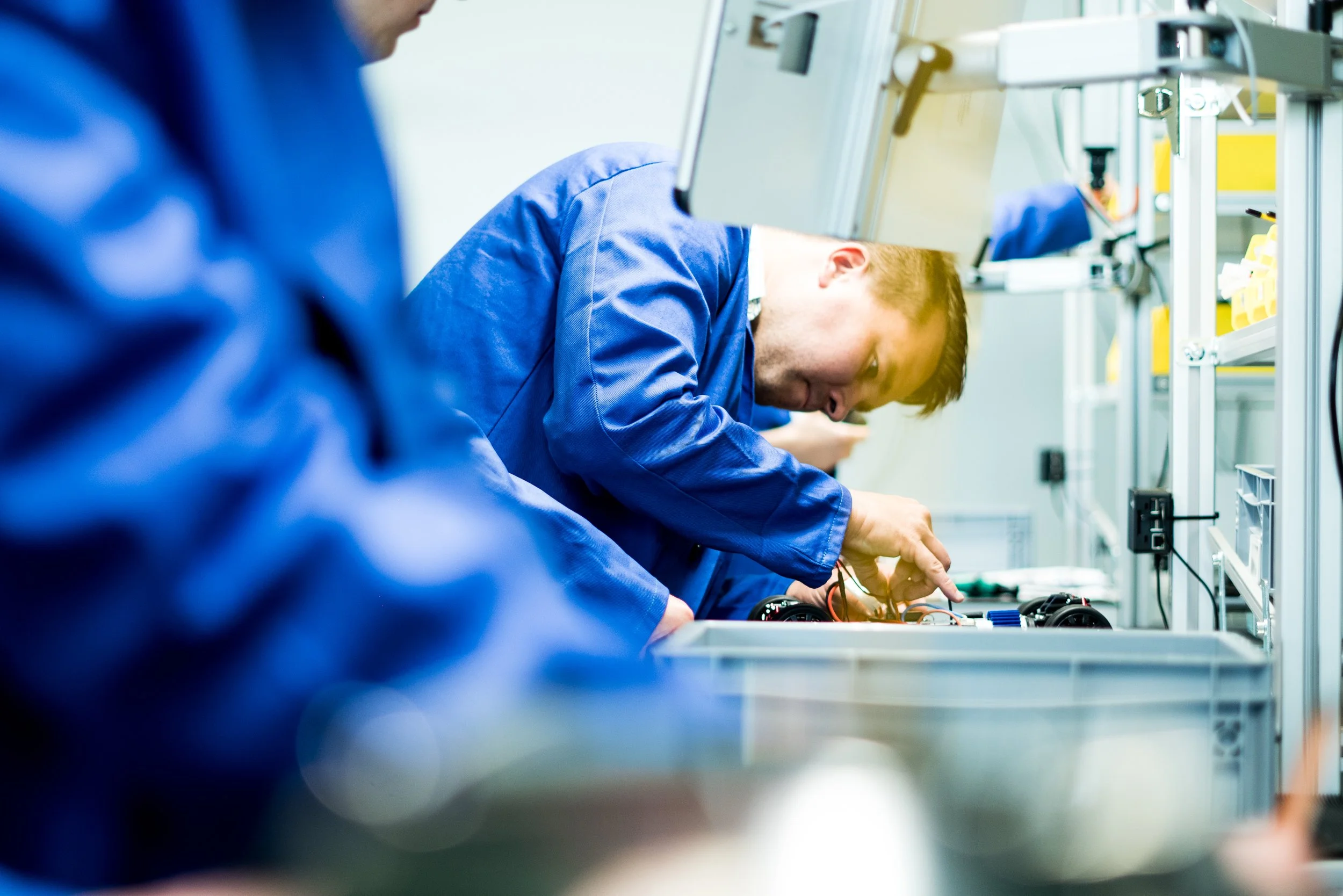
image source: p3-group
Company Overview
P3 Group is an international technology and engineering company founded in 1996 as a spin-off from the Fraunhofer Society in Aachen, Germany. Today, P3 employs approximately 2,000 people across multiple countries and has continuously reinvented itself over nearly three decades - From an engineering consultancy into a technology company and increasingly an AI-driven innovation company.
What makes P3 unique is that its entrepreneurial culture was not created through a transformation program. It emerged naturally from the founders' beliefs and has remained remarkably consistent while the company scaled internationally.
Context
P3 operates in industries experiencing constant disruption, including automotive, telecommunications, aerospace, energy, software and digital technologies.
Instead of protecting existing structures, P3 deliberately treats organizational evolution as a continuous capability.
As Daniel Wulf explains:
"We never transformed into this organization. We were founded this way."
Origins – Entrepreneurial Freedom Before There Was a Name for It
Unlike many companies that adopt modern management frameworks later, P3's founders built the organization largely through intuition.
The company started almost accidentally. Three PhD students from the same university chair successfully pitched a quality improvement concept to Daimler. Winning the project required creating a company almost overnight.
Their attention focused almost entirely on delivering value for the customer - not on designing management systems.
One of the founders, Christoph Theis, often summarizes his motivation simply:
“I founded a company because I didn’t want to have a boss.”
Without consciously following a management theory, the founders naturally built an organization around trust, autonomy and entrepreneurship.
Years later they discovered that many of the principles they had been practicing already existed in modern management literature.
Challenge
Around 2018 P3 experienced its biggest strategic turning point.
After nearly twenty years of rapid growth - expanding to more than 4,000 employees - one of two remaining founders wants to sell the company or take it public.
Large acquisition offers convinced many shareholders that selling represented the financially optimal decision.
Founder Christoph Theis fundamentally disagreed.
His belief was that P3's purpose was not maximizing shareholder value through an exit, but continuously creating value through entrepreneurship.
The disagreement resulted in the company splitting into two separate organizations.
Christoph restarted P3 with approximately 1,000 employees.
Today the company has successfully grown back to around 2,000 employees while preserving its entrepreneurial culture.
Ambition
P3 has never aimed to become the world's largest consulting company.
Instead, the founders describe it as an "Abenteuerbude" - an adventure company - where talented people enjoy maximum entrepreneurial freedom.
The ambition is to build an organization where people:
continuously develop themselves
choose opportunities rather than avoid risk
decide close to the customer
freely move toward topics they are passionate about
reinvent the company every year
The objective is not stability.
The objective is the ability to reinvent faster than the market changes.
Evolution Approach
1. Entrepreneurial Freedom Instead of Organizational Control
Perhaps the most defining principle at P3 is trust.
Employees are trusted to determine:
how they work
where they work
when they work
which methods they use
how they solve customer problems
The company deliberately avoids unnecessary rules.
According to Daniel Wulf:
"We don't want people to adapt themselves to the organization. We want the organization to create a space where people can unfold."
The primary measure of success is customer value - not compliance.
2. People Choose Their Leaders
Every year employees actively choose the leader they want to work with.
Leaders therefore compete for people - not the other way around.
This creates a very different leadership model:
leadership becomes a service
good leaders naturally attract talent
poor leadership cannot survive indefinitely
employees regularly reflect whether their current leader still helps them grow
The yearly choice keeps leadership accountable without bureaucracy.

image source: p3-group
3. Frozen April – Reinventing the Company Every Year
Every April P3 pauses normal organizational changes to redesign itself for the coming year.
During "Frozen April" the company reviews e.g.
leadership assignments
organizational structure
customer portfolio
strategic competencies
bonus distribution
individual development goals
Employees also reconsider which leader they want to follow and which capability communities they want to join.
Rather than allowing organizational structures to accumulate over time, P3 intentionally refreshes them every year.
4. Growth Through Communities Instead of Bureaucracy
One of P3's biggest challenges was preserving culture while scaling rapidly.
Instead of relying on formal culture programs, growth happened largely through trusted networks.
Early employees recruited former university colleagues. Later they recruited friends and trusted professionals from their networks. By the time the company exceeded one hundred employees, a strong community already existed. Culture therefore spread socially before formal HR systems even existed.
5. Open Strategy
P3 deliberately avoids restricting innovation through predefined business boundaries.
A simple principle applies:
“If someone is passionate about solving a customer problem and a customer is willing to pay for it, P3 will explore it.”
New business areas emerge from entrepreneurial initiatives rather than top-down strategic planning. Some become entirely new business units. Others naturally disappear when customer demand declines.
6. Small Companies Instead of Large Bureaucracies
Rather than building one increasingly complex organization, P3 continuously creates new companies and specialized business units.
Today the group consists of around thirty companies. These companies remain highly connected. Employees move freely across them depending on customer needs and expertise. The legal structure exists primarily to maintain entrepreneurial speed - not organizational separation.
As Daniel Wulf explains:
"We believe in fleets of agile speedboats, not giant tankers."
7. Trust Means Resisting Bureaucracy
An especially interesting insight concerns how P3 deals with mistakes.
Whenever an employee exploits a loophole or an exceptional case occurs, the instinct in most organizations is to introduce another rule.
P3 consciously resists that temptation.
Instead of punishing thousands of future employees because of one isolated incident, the company accepts occasional imperfections in exchange for maintaining freedom and trust.
This philosophy has become one of the strongest protectors of the culture.
8. Ownership Creates Entrepreneurship
Intrinsic motivation alone is considered insufficient. P3 complements purpose and autonomy with meaningful financial participation. The company remains entirely privately owned.
Successful long-term entrepreneurs receive:
performance bonuses
profit sharing
ownership shares
opportunities to build and lead new companies
Entrepreneurship therefore becomes economically rewarding - not merely culturally encouraged.
9. AI as the Next Reinvention
P3 views Artificial Intelligence as another opportunity to reinvent itself.
Current investments include:
AI-supported software development
AI agents for administrative processes
AI-supported engineering
AI-supported quality management
significant investment into new AI capabilities
Rather than protecting existing roles, P3 continuously develops new entrepreneurial opportunities around AI.
Outcomes
Business Outcomes
Successfully rebuilt the company after the 2018 split from approximately 690 to around 2,000 employees.
Nearly thirty years of continuous entrepreneurial evolution.
Approximately thirty specialized companies operate as one ecosystem.
Exceptionally low employee turnover despite intense competition for talent.
Employees actively choose their leaders every year.
Annual organizational redesign institutionalized through Frozen April.
More than half of employees now work in software and digital technologies.
Continuous creation of new businesses and entrepreneurial ventures.
Strong AI investment while maintaining entrepreneurial flexibility.
Key Insights for Other Organizations
P3 demonstrates that entrepreneurial organizations do not require complicated transformation frameworks.
Instead, several principles consistently reinforce one another:
Trust scales better than control.
People should choose leaders - not simply report to them.
Annual organizational redesign prevents bureaucracy from accumulating.
Small entrepreneurial units outperform large centralized structures.
Culture spreads primarily through people, not policies.
Resist introducing new rules for isolated exceptions.
Ownership reinforces entrepreneurial behaviour.
Continuous reinvention is a capability, not a project.
Conclusion
P3 illustrates that entrepreneurial freedom and commercial success are not opposing objectives. For nearly thirty years the company has deliberately optimized for adaptability rather than stability.
Its success suggests that organizations do not become resilient by designing better bureaucracies. They become resilient by creating environments where entrepreneurial people continuously redesign the organization themselves.
Outlook
As AI fundamentally changes knowledge work, P3 intends to accelerate - not slow down - its entrepreneurial model.
Rather than viewing AI as a threat to existing jobs, the company sees it as a catalyst for creating new businesses, new capabilities and new opportunities for employees to become entrepreneurs.
For organizations searching for management models suited to the AI era, P3 offers a compelling example of how trust, ownership and continuous reinvention can outperform traditional command-and-control structures.
All Posts of this Series
Post 1 - A Preview of the Haier ZeroDX Awards 2026
Post 2 - P3 Group Case Study
Post 3 - Embraer Case Study
Post 4 - Gel Studios Case Study
Post 5 - Mercedes Case Study
Post 6 - foryouandyourcustomers Case Study
Post 7 - The Haier ZeroDX Awards 2026 (Staytuned - later in Sep/Oct)