
From Company to Ecosystem: Expanding Entrepreneurship Beyond Organizational Boundaries
By Mirko Kleiner | Blog Series | August 2026
The future of organizations won’t be shaped by AI alone. At the LAP Alliance, we connect Leadership, New Operating Models, Business Ecosystems, and emerging Technologies to explore what it really takes to thrive in the AI Era.
One standout example is Haier — a global pioneer that transformed from a traditional manufacturer into an entrepreneurial ecosystem, inspiring progressive organizations worldwide while achieving remarkable, sustained 20% growth.
I’m honored to be part of a select group of international experts collaborating with the Haier Model Institute, alongside thought leaders including Gary Hamel, Bill Fischer, and Umberto Lago.
This year, the LAP Alliance will once again join the Haier ZeroDX Forum & Awards — where pioneers from around the world come together to share how they are reinventing management.
In this new blog series, we’ll bring those insights to you: real cases, bold experiments, and practical lessons from the Haier Zero Distance Excellence Awards 2026 — exploring how AI, entrepreneurship, and business ecosystems are redefining the future of organizations.
Post 4 - foryouandyourcustomer Case Study
foryouandyourcustomers, European, https://foryouandyourcustomers.com/
By Mirko Kleiner interviewing Jonathan Moeller, Founder of foryouandyourcustomers & André Mahler, Head Corporate Civilisation
Guest Case Study | August 2026
Introduction
foryouandyourcustomers is a leading European consultancy specializing in digital and organizational change, emphasizing a value-driven, decentralized approach. Founded by Jonathan Moeller, Stephan Mueller and Robert Josef Stadler in 2010, foryouandyourcustomers operates on the belief that organisations should serve the personal development of their employees, fostering a space for individuals and collective to grow, innovate and thrive. With 15 locations across six countries, foryouandyourcustomers employs 200 professionals who work autonomously within independent "cells" while aligning with the company's core values.
Over time, however, a new challenge emerged. While the cell structure proved highly successful for scaling the consulting business, more and more new opportunities arose that no longer fitted naturally within the existing organizational boundaries. Some ideas evolved into new products, others into entirely new businesses, while still others required different brands, capabilities or market positioning.
Rather than forcing every new opportunity into the existing structure - or losing entrepreneurial talent - the leadership team started asking a new question:
How can entrepreneurship continue to flourish while preserving the shared culture, relationships and values that made the organization successful in the first place?
From Scaling a Company to Growing an Ecosystem
Jonathan Moeller explains that the organization's ambition has shifted fundamentally. Instead of growing the decentralized organisation larger and larger within one brand, the focus is now on multiplying the capabilities within an ecosystem in which multiple entrepreneurial entities can emerge while remaining connected through a shared philosophy called inthenow.
The traditional cell model remains an important part of this evolution. New ideas can still grow within existing cells or develop into entirely new cells. However, the organization has consciously expanded the available development paths.
Today, entrepreneurial initiatives can evolve in four different ways:
as new products or services within an existing cell,
as newly created cells,
as spin-offs jointly owned by the founders and foryouandyourcustomers,
or as completely independent companies.
Rather than prescribing one organizational model, the company deliberately creates different entrepreneurial spaces depending on the maturity, risk profile and strategic relevance of each opportunity.
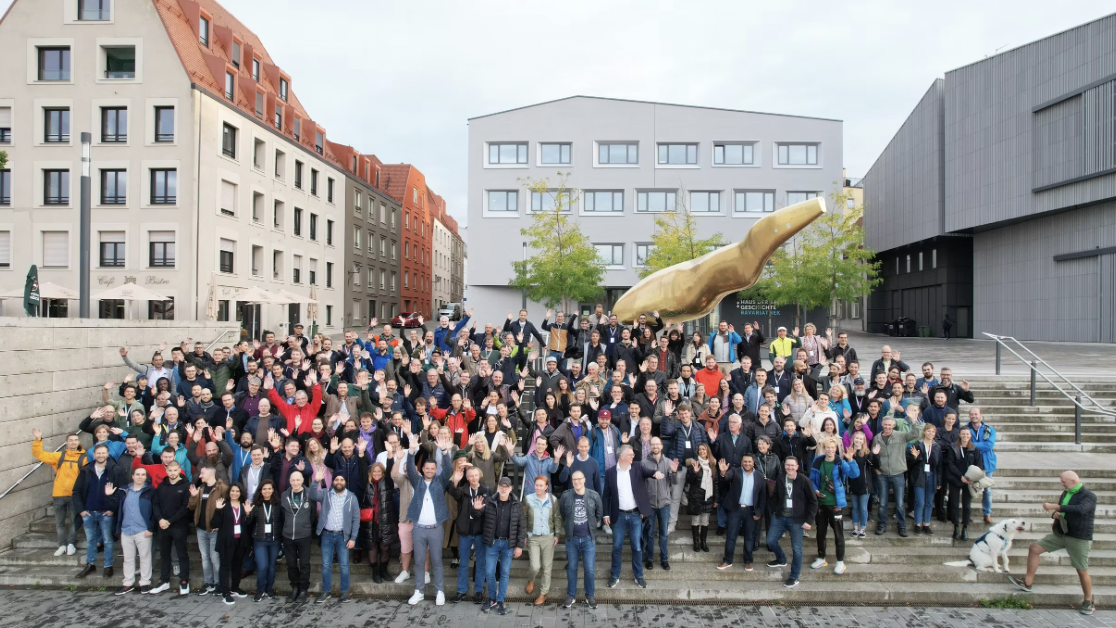
image source: foryouandyourcustomers.com
Entrepreneurship Needs More Than Freedom
One of the most remarkable insights about foryourandyourcustomer’s latest developments is that entrepreneurship alone is not sufficient. Complete independence may maximize freedom, but it often disconnects new ventures from the knowledge, relationships and intellectual assets that enabled their creation in the first place.
The leadership therefore began designing a model where independence and belonging could coexist.
Their answer is inthenow - not another company, but a shared ecosystem platform.
Rather than acting as a traditional holding company, inthenow provides the common foundation that connects all participating organizations. It becomes the home for shared intellectual property, methods, publications, learning formats, conferences and future community activities. Companies remain autonomous while contributing to and benefiting from a continuously evolving body of knowledge.
Jonathan describes this less as a corporate structure and more as a community of entrepreneurs who intentionally choose to collaborate because they share similar values and ways of working.
Valuing Intellectual Property as a Shared Asset
An important consequence of this ecosystem thinking is a new approach towards intellectual property.
Instead of allowing knowledge to spread informally between companies, foryouandyourcustomers decided to make its intellectual assets explicit. Frameworks, management methods, publications and digital tools are transferred into inthenow, where they become shared assets that participating companies can license.
Interestingly, licensing is not primarily viewed as a revenue model. Instead, it serves three purposes:
recognizing the value of years of development,
ensuring sustainable investment into future innovation,
and creating fairness between organizations that both contribute to and benefit from the ecosystem.
The same principle applies in both directions. While spin-offs license methodologies from the ecosystem, established companies also pay for software and capabilities developed by the new ventures, creating mutual value exchange instead of one-way dependency.
Learning Through Entrepreneurial Experiments
The journey has not been without challenges.
Previous spin-offs and employees leaving the organization generated valuable learning experiences. Some entrepreneurial ventures succeeded, while others revealed tensions around ownership, expectations and autonomy.
Rather than seeing these departures as failures, André describes them as an essential part of personal and organizational development and learning.
Every entrepreneurial experiment - whether successful or not - helped the company better understand what people truly seek when they decide to become entrepreneurs. These experiences ultimately shaped the new ecosystem approach, which intentionally provides different levels of entrepreneurial freedom instead of offering only one path.
The organization therefore treats experimentation not as an exception but as an integral capability for continuously improving its organizational design.
Ecosystems Grow Through Relationships
One of the strongest themes emerging from the interview is that ecosystems are ultimately built through relationships rather than structures.
New businesses such as kustik.com, operating in the entirely different industry (construction), have already demonstrated how different businesses can mutually accelerate each other's development. Digital capabilities from foryouandyourcustomers supported kustik's rapid market entry, while experiences from kustik generated new ideas and software products that now benefit the wider ecosystem.
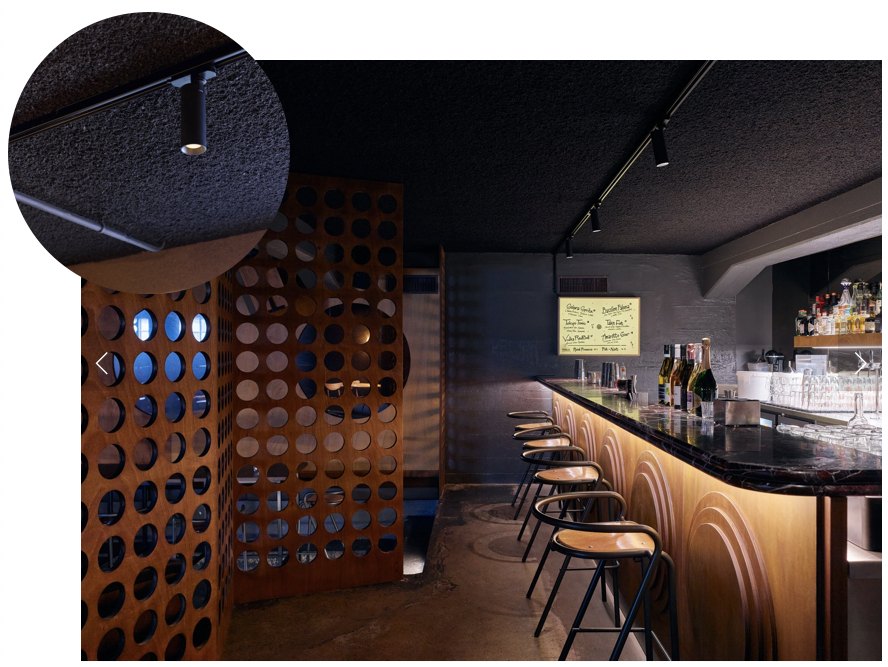
image source: kustik.com - Noise reduction up to 90%
The emerging pattern goes beyond cross-selling: new businesses open doors for existing ones, relationships create new customers, and knowledge and practices flow in both directions. Autonomous businesses can therefore remain distinct while accelerating each other through trust, relationships and shared opportunities.
This thinking extends far beyond the organization's own companies. Jonathan describes conversations with manufacturers, software companies and entrepreneurs from entirely different industries who increasingly recognize common principles and begin contributing their own innovations.
Instead of creating isolated organizations, the ambition is to build a growing network of companies that continuously exchange ideas, capabilities and entrepreneurial opportunities.
As Jonathan summarizes:
"The Ecosystem becomes much more like an Ecosociety."
Looking Beyond Organiza-tional Boundaries
The interview also highlights the influence of RenDanHeYi and the inspiration gained from visiting China in 2025.
According to both Jonathan and André, the experience reinforced their belief that future organizations should think less in terms of organizational boundaries and more in terms of entrepreneurial ecosystems and human relationships.
Rather than continuously optimizing existing structures, organizations should create environments where ideas can emerge, mature, disappear or evolve naturally. Some initiatives become products. Others become companies. Some fail quickly. Others unexpectedly grow into entirely new businesses.
This entrepreneurial fluidity increasingly shapes how foryouandyourcustomers approaches leadership, innovation and organizational evolution.
Key Insights for Other Organizations
The experience of foryouandyourcustomers offers several lessons for organizations seeking to build more adaptive and entrepreneurial organizations:
Expand the available entrepreneurial paths. Not every innovation requires a new business unit or a separate company. Multiple organizational options create greater flexibility.
Think beyond organizational boundaries. Sustainable innovation increasingly happens within ecosystems rather than individual companies.
Treat intellectual property as a living ecosystem asset. Shared methods, tools and knowledge deserve both recognition and continuous investment.
Accept experimentation as organizational learning. Successful and unsuccessful ventures alike generate valuable insights for future organizational design.
Relationships create stronger ecosystems than governance alone. Shared values, trust and mutual benefit remain the true foundation for long-term collaboration. However, this does not mean neglecting governance entirely as that provides the structural backbone for these relationships.
Conclusion
The evolution of foryouandyourcustomers illustrates how organizational development can move beyond the traditional question of scaling a company.
Instead, the organization is gradually designing an entrepreneurial ecosystem where companies remain independent while sharing a common philosophy, intellectual assets and long-term purpose. Through initiatives such as inthenow, new governance models for spin-offs and a deliberate focus on ecosystem thinking, foryouandyourcustomers demonstrates that organizational boundaries no longer need to define the limits of innovation.
Rather than building one large organization, they are cultivating an ecosystem where entrepreneurship itself becomes the scalable capability.
Link to trailer of upcoming Movie: https://vimeo.com/1166369341?share=copy&fl=sv&fe=ci
All Posts of this Series
Post 1 - A Preview of the Haier ZeroDX Awards 2026
Post 2 - P3 Group Case Study
Post 3 - Embraer Case Study
Post 4 - Gel Studios Case Study
Post 5 - Mercedes Case Study
Post 6 - foryouandyourcustomers Case Study
Post 7 - The Haier ZeroDX Awards 2026 (Staytuned - later in Sep/Oct)