Siemens Mobility – Design to Cost, Reimagined
Siemens Mobility enables its customers worldwide to realize sustainable mobility solutions. As a leading technology company, they combine the real and digital worlds. A portfolio of rolling stock, rail infrastructure, rail services, and software, establish sustainable, comfortable, and cost-effective rail traffic today. Operating in complex, long-term projects, the company plays a dual role as both a strategic partner to public and private clients and an orchestrator of a global supplier ecosystem. Its strength lies in integrating engineering excellence with system-level innovation to deliver reliable, scalable, and future-ready mobility solutions.
Challenge “Sandwich position”
In its projects, Siemens Mobility operates in a dual role - both as a supplier to its clients and as a buyer managing a network of tier-1 suppliers. This “sandwich position” is inherently complex, as each party brings its own expectations, constraints, and budget pressures.

“In one day, we made decisions that usually take weeks. That’s the power of true alignment.”
The challenge is further amplified by the long lifecycle of such mobility projects. Years after initial agreements, end customers may exercise additional options—while technologies evolve, components change, and market prices shift significantly.
In one recent subway project, Siemens Mobility faced exactly this situation: additional scope was introduced several years into execution, while the original budget framework remained unchanged.
Approach
Traditionally, Siemens Mobility had two primary levers to stay within budget: passing cost pressure downstream to suppliers or launching a conventional cost-down initiative. Both approaches are rooted in a win–lose mindset, where tier-1 suppliers - especially strategic partners delivering high-value systems - have little incentive to actively contribute beyond compliance.
“When facing complexity, we instinctively try to control it — through specs, assumptions, and alignment. But this limits our solution space.
LAP does the opposite: it opens the space again through collaboration, iteration, and outcome focus”
To break this pattern, a different approach was tested: one grounded in a win–win mindset and built on the principles of Lean-Agile Procurement (LAP). Previous LAP applications with other companies had already demonstrated significant improvements in lead times and design optimization delivering measurable benefits for all parties involved.
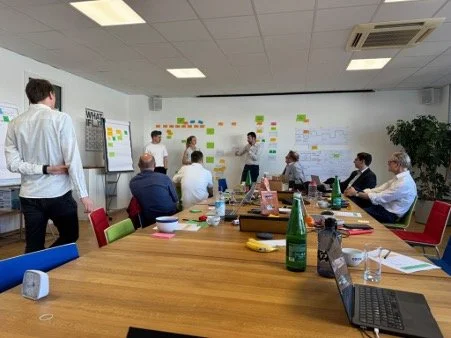
Image 1: Big Room Workshop - Impressions co-creation with strategic partner
At the core of this approach was a focused, high-impact one-day co-creation workshop. Siemens Mobility and one of its key suppliers, together with representatives from commercial, legal, project / product management, engineering, etc. worked side by side to identify, prioritize, and qualify improvement opportunities. The focus extended beyond hardware optimization to include collaboration models - aiming to create tangible value for the end customer, Siemens Mobility, and its partners alike.
Ambition
The underlying assumption was simple but powerful:
Bring the right people into the room - and you dramatically improve the quality of exchange, the speed of decisions, and the technical and commercial validation of ideas.
Beyond faster alignment, the team aimed to unlock new perspectives and ideas - the kind that typically don’t emerge in sequential, siloed processes.
On a practical level, the ambition went further:
Increase standardization and modularization
Drive modernization of solutions and ways of working
Establish a stronger, more collaborative partnership
Enable better commercial outcomes through joint value creation
The focus was placed on shared value creation - trusting that improved commercial results would follow as a natural consequence, not as the primary driver.
Big Room Workshop
To bring this ambition to life, a one-day Big Room Workshop was conducted, bringing together all relevant capabilities from both organizations - engineering, procurement, legal, commercial, project/client representatives.
The setup was intentionally different from traditional formats:
no sequential handovers, no hidden agendas - just full transparency and joint ownership.
The high-level structure included:
1. Introduction
Setting the context, objectives, and expectations for the day
2. The Approach — “This Is Different”
Establishing a win–win mindset and clearly positioning the workshop as a co-creation effort - not a negotiation
3. Strategic Alignment
Aligning on goals, constraints, and shared success criteria across all stakeholders
4. Joint Ideation & Prioritization
Generating improvement ideas together, guided by a provocative framing:
👉 “What if we could be 100% faster, better, and more cost-efficient?”
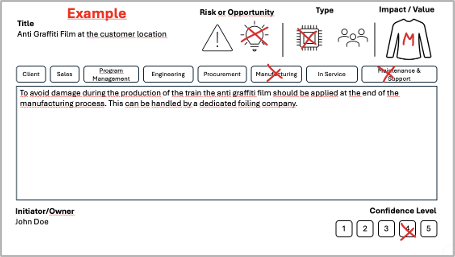
Image 2: Opportunity Template - Example, source Oliver Bellon Siemens
5. Breakout Sessions (Idea by Idea)
Deep-diving into prioritized ideas to:
Validate feasibility (technical & commercial)
Refine or discard concepts
Quantify improvements
Identify joint measures
Build confidence through structured feedback and commitment
6. Joint Roadmap Planning
Consolidating validated ideas into a clear, actionable roadmap
7. Closing
Aligning on next steps, ownership, and follow-up actions
General Advantages
Beyond standardization and modernization of existing components, the Big Room Workshop unlocked a broader opportunity: optimizing the entire value stream - not just individual parts.
For example, one component - the Anti Graffiti Foil - was questioned with a clear end-user perspective in mind. Instead of requiring an expensive replacement procedure by the customer during maintenance an alternative established solution was proposed - a critical advantage in cases such as vandalism damage. The result was a simpler design, reduced manufacturing and supply complexity, and significantly lower lifecycle effort.
Another key advantage of the setup was real-time decision-making. Whenever questions arose regarding contractual constraints, legal experts and project management were present to clarify feasibility immediately - eliminating delays and avoiding the typical back-and-forth between parties.
Finally, the deliberate use of “moonshot thinking” - challenging the team to explore ideas that could improve performance, speed, or commercial outcomes by 50–100% - expanded the solution space significantly. This shift in mindset led not only to incremental improvements, but to the creation of an entirely new joint business case.
By embedding a true win–win mindset - including the opportunity for all parties to participate in the value created - the dynamic fundamentally shifted. What was once a traditional buyer–supplier relationship evolved into a genuine strategic partnership, built on shared outcomes, trust, and joint success.
Outcomes
The results not only met the initial ambition - they significantly exceeded it.
Within a single day, the team generated and assessed around 20 improvement ideas. Some were quickly and jointly discarded - typically due to disproportionate investment or adaptation effort. Others were explored in depth, including their implications on system architecture, documentation, regulatory requirements, and overall feasibility.
What made the difference was the real-time, cross-company validation: each idea was transparently assessed, commercially and technically estimated, and jointly committed - enabling immediate decisions on whether to proceed or not.
This directly delivered on the initial ambition:
Speed of decision-making → Weeks or months compressed into hours
Quality of exchange → All perspectives integrated from the start
Qualification of ideas → Technical and commercial feasibility ensured instantly
New ideas unlocked → Including options not previously considered
And most importantly:
👉 The initiative resulted in design improvements equivalent to more than 23% of total system cost - an exceptional outcome by any standard.
Conclusions
In complex, long-term projects, success is not defined by who captures the most margin in the short term. It is defined by how well organizations collaborate across boundaries to create value none of them could achieve alone.
The experience of Siemens Mobility shows:
When you change the mindset, you don’t just optimize cost - you redefine what’s possible.
Key Takeaways
Timing matters - Design to cost delivers the greatest impact when applied early during offering and design phases. Applied late, it becomes constrained optimization. And yet: even under constraints, significant results are still achievable in this collaborative approach.
Focus on the 20/80 - Invest least possible efforts to quantify, prioritize and jointly commit improvement ideas.
One day can replace weeks - with the right preparation and the right people in the room.
Moonshot thinking unlocks breakthroughs - Challenging the team with 50–100% improvement targets expands the solution space and leads to ideas that would otherwise never emerge.
Beyond cost: new opportunities - Joint standardization and collaboration don’t just reduce cost they unlock new business models and shared value creation.
Mindset is the real barrier - This approach requires a cultural shift from negotiation to co-creation and co-innovation. For many, that’s the biggest change that needs proper preparation.
Learn more
Blog post: Unlock 20%+ Savings. Breakthrough Innovation. In 1 Day.
Learn more about Big room workshop
Get the official Book“How to get Twice the Value in Half the Time”
Author
wanna know more or have a design-to-cost initiative ongoing please contact me