Unlock 20%+ Savings. Breakthrough Innovation. In 1 Day.
May 2026
By Mirko Kleiner, Thought Leader & President, LAP Alliance – mirko.kleiner@lap-alliance.org
Markets have changed. Volatility is the new normal. Supply chains are fragile. AI / Technologies evolve faster than contracts. Business Cases are under pressure and customers always expect more - faster, better, cheaper.
Sounds familiar? Here’s the uncomfortable truth:
✅ Cost Pressure isn’t the problem.
❌ The way we approach it is.
There is a better way.
One that delivers speed, savings, and innovation - simultaneously and for all.
👉 I want to address those root causes. What practical steps can we take to deal with market uncertainty and price instability?
Not in theory — but hands-on and measurable.
💬 Got specific questions? Drop them in the comments — I’ll address them.
📩 Facing concrete challenges in your Design-to-Cost initiative? Send me a message.
The Problem Isn’t Cost Pressure — It’s the Way We deal with It
Cost pressure is nothing new. Prices have always fluctuated, shaped by supply, demand, and competition. What has changed is the environment.
Product lifecycles are getting shorter, more complex, and increasingly interconnected - while price stability is steadily decreasing. Technologies evolve faster than contracts, and global supply networks have become more fragile. In short: volatility is now the norm.
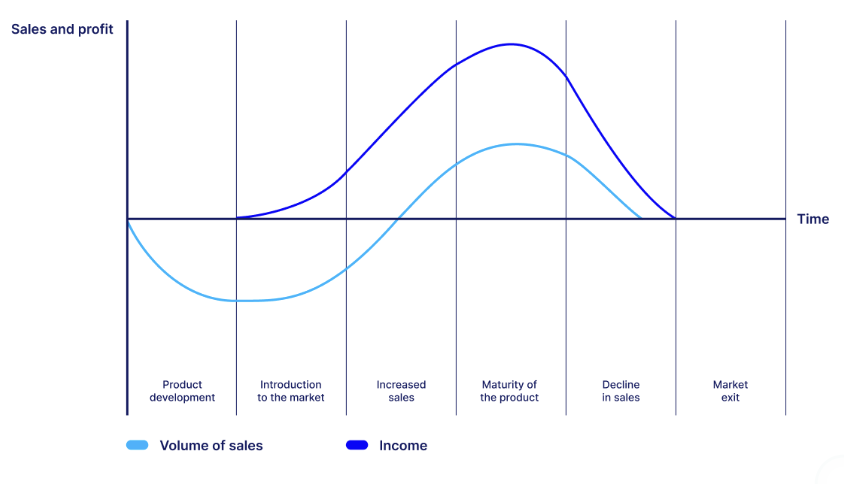
Image 1: Sales & Profits over a product lifetime, source altcraft.com
And yet, many organizations still respond the same way.
When costs rise, they negotiate harder, push pressure upstream, trying to protect margins - often in a win–lose mindset. It sounds reasonable, but the outcome is predictable: innovation slows, suppliers disengage, and improvements remain incremental.
It delivers only minor short-term savings while wondering why innovation stalls.
In today’s world, that no longer works.
Real advantage comes from collaborating better across companies alongside the whole value stream.
My Observations and Recommendations – Practical, Hands-on, and Measurable
Mirko Kleiner – I’ve been following the Agile community for more than 20 years and consider myself an experienced practitioner in Agile adoption and enterprise transformation. About 10 years ago, with the creation of Lean-Agile Procurement (LAP), I also entered the commercial world — and quickly realized how often the biggest bottlenecks sit outside delivery.
Working with some of the world’s most progressive organizations — including Haier and Roche — and through global collaboration with other tought leaders and 36+ alliances, universities, and certification bodies across the Lean, Agile, Procurement, Legal and Supply Chain communities, I’ve gained a broad end-to-end perspective.
One thing is crystal clear: adjusting to new prices is not optional, but there has to be a better way - one that could be done ASAP.
“Breaking down Silos
is NOT Optional
in the Age of AI”
And the results speak for themselves. Our clients report outstanding outcomes:
Achieve up to 800% faster time-to-market, aligned with Agile cadences.
Realize 80% better commercial outcomes through co-creative partnerships.
Transform traditional supplier relationships into long-term co-innovation ecosystems.
Build compliant yet adaptive procurement capabilities that match the speed of delivery.
Do you want your strategic procurement done in days/weeks, not months/years? Let’s make it happen and check out my observations and practical recommendations for improvement.
🧩 Observation #1 – Design-to-Cost Starts Too Late
Most Design-to-Cost initiatives begin when the budget is already under pressure, a contract was signed and delivery has begun. At that point, 80–90% of design decisions are already fixed. You’re not designing to cost anymore — you’re cutting to survive.
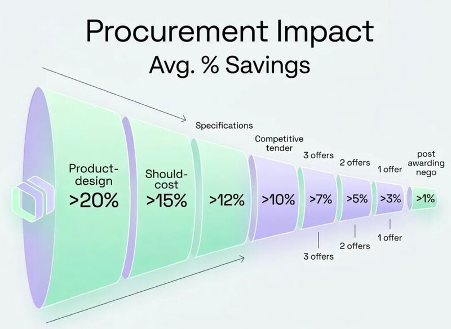
Image 2: Design-to-Cost impact applying traditional approaches, source Alejandro Basterrechea
My recommendations – Practical, hands-on, measurable
Start early — at product design stage
Apply Design-to-Cost during the concept and architecture phase. If you’re in a project business start in offering phase instead.Design for outcomes, not solutions
Keep solutions (Hardware, Software and Services) outcome-based and prioritized by real customer demand. Eliminating “nice-to-haves” can unlock significant savings potential (up to 80% from our experience).Integrate cost into architecture decisions
Define cost targets per component, service, or module early on and Develop a should-cost architecture iteratively alongside the product and/or service.Make cost a design parameter
Treat cost like performance or quality as a core design constraint from day one!
🧩 Observation #2 – Suppliers Are Involved Too Late (or Not at All)
In many organizations, suppliers are brought in only after specifications are already defined. At that point, their role is reduced to: “Can you do it cheaper?”. But by then, the biggest cost drivers are already locked in. Standard solutions are locked out. You’re no longer co-designing - you’re negotiating constraints.
Now imagine a different approach:
👉 Internal and external experts collaborating iteratively as the product or service evolves
👉 Cost drivers identified and eliminated early - when it still matters
👉 Alignment on standards and use of existing components instead of custom solutions
This is exactly where approaches like Lean-Agile Procurement shift the game.
Suppliers are always involved - also during the tender - and delivery phase, working collaboratively with engineering, business, commercial, and legal teams to co-create the best possible solution within given objectives, constraints and cost targets.
And even if a contract is already in place:
👉 Scope and contracts are kept outcome-based, not solution-fixed
👉 There’s always Room to adapt and improve during delivery
👉 Big Room Workshops are used to jointly identify optimization opportunities and even new business cases
Check out our case study with Siemens Mobility (published soon)
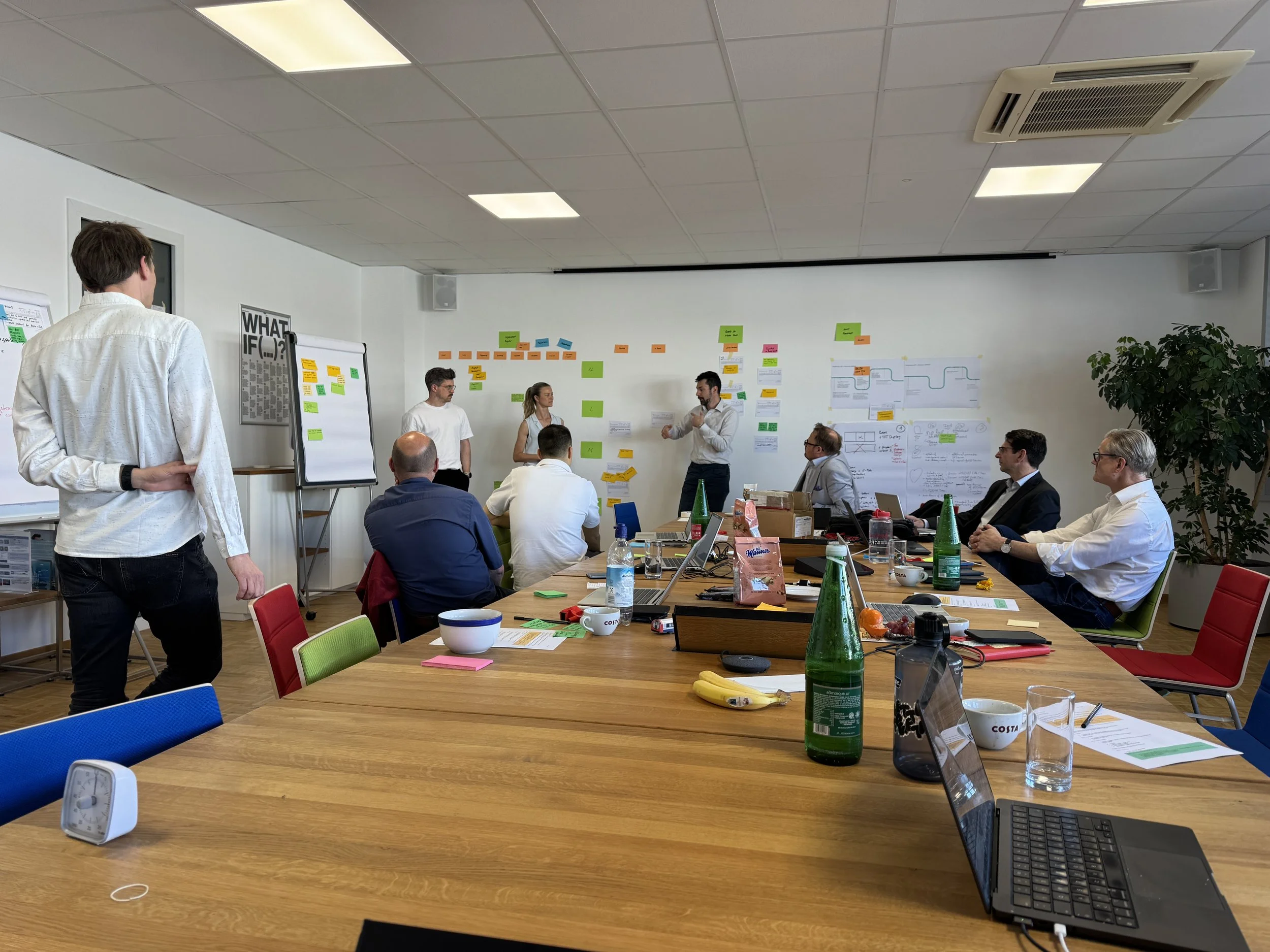
Image 1: Big Room Workshop - Impression
My recommendations – Practical, hands-on, measurable
Involve suppliers early - for strategic partners this is not optional
Bring key partners into the design phase, not just ones but continouslyWork with the full value stream
Include internal and external experts to identify cost drivers early and align on standard solutions wherever possible.Treat suppliers as co-designers
Not bidders. Not cost factors. Partners in value creation.Create full transparency
Share business objectives, should-cost, constraints, and trade-offs openly.Because the best ideas often sit outside your organization.
🧩 Observation #3 – It’s Focused on Price, Not Value
Traditional cost-down initiatives tend to focus on unit price optimization. Components are replaced with more modern or standardized alternatives - but often at the expense of what really matters: the original user need, lifecycle cost, and integration complexity.
In many cases, these initiatives are led by procurement, with cost savings as the primary objective. For commodity components and services, this is the approach to go. But for more complex, strategic products and systems, it quickly reaches its limits.
What’s needed is a shift—from cost to value.
Value not just for one party, but across the entire ecosystem:
👉 What truly matters to the customer?
👉 What creates value for strategic suppliers?
👉 And how do we align both with our own objectives?
This is where a win–win–win mindset becomes critical.
Instead of optimizing individual components, leading organizations focus on understanding what drives real value for a specific customer segment - and then delivering it in the most effective way. This is where the Pareto principle (80/20) comes into play: identifying the few elements that create the majority of impact at the lowest costs.
With every new customer need, solutions are explored end-to-end across the entire value stream. Together with suppliers and partners, the focus shifts to:
Finding 80/20 solutions
Increasing standardization and modularization
Designing products and product lines that are easier to offer, produce, and scale.
In practice, this shift often unlocks entirely new business and commercial models:
Project-based approaches evolving into subscription models, where all parties share in ongoing success
Joint solutions enabling reseller models, turning customers into partners in value creation
Even cases where manufacturing partners co-invest in product lines, driven by shared upside in future revenues
Cost optimization improves what exists.
Value optimization creates what’s next.
My recommendations – Practical, hands-on, measurable
Start with customer value - not cost
Define what truly matters to the customer first. Then design the solution to deliver that value at the most effective cost.Apply the 80/20 principle rigorously
Identify the 20% of customer needs that drive 80% of the value. Find solutions that cost 20% to deliver 80% of value. This is where the biggest savings sit.Optimize the value stream, not the component
Move beyond unit price. Include lifecycle cost, integration effort, operations, and scalability in every decision.Co-create & co-innovate with strategic partners
Bring key suppliers into the discussion early and transparently. Align on shared value instead of negotiating individual margins.Standardize where it creates leverage
Actively push for modularization and standard components across projects. This reduces complexity, increases speed, and enables scale.Design for new business models
Don’t stop at cost reduction. Explore opportunities for subscriptions, shared revenue models, or co-investments.
🧩 Observation #4 – It’s Done in Silos
In many organizations, design-to-cost is executed across separate functions:
Engineering optimizes design.
Procurement negotiates cost.
Legal protects risk.
Business and key clients, ups forgotten to include.
Each function acts rationally—within its own objectives. But they operate sequentially and in isolation. The result is predictable:
👉 long lead times - often several months
👉 sub-optimization of the overall system.
👉 missed optimization ideas, risks, experiences
Decisions are made without full context, trade-offs are addressed too late, and valuable opportunities are lost in handovers between functions.
This is exactly why Lean-Agile Procurement promotes co-creating solution designs, proposals, and contracts during strategic sourcing—bringing multiple shortlisted vendors together at the same time.
My recommendations – Practical, hands-on, and measurable
Bring the ecosystem into the room
Involve engineering, procurement, legal, manufacturing, and business stakeholders from either party from the start.Work cross-functional & cross-company, not sequential
Replace handovers with joint working sessions where decisions are made in real time.Make trade-offs transparent
Align technical, commercial, and legal perspectives early—before decisions are locked in.
🧩 Observation #5 – It’s Treated as a One-Off Exercise
In many organizations, design-to-cost is still treated as a one-time initiative:
👉 “We need savings—let’s run a project.”
Once the target is achieved, the effort and the cross-company collaboration fades away.
There is no structured learning, no reuse of insights, and no capability built for the future. As a result, every new initiative starts from scratch—repeating the same effort with limited cumulative impact.
But design-to-cost is not a project.
It’s a capability and a design parameter.
My recommendations – Practical, hands-on, and measurable
Bring the ecosystem into the room
Involve engineering, procurement, legal, manufacturing, and business stakeholders from either party from the start.Work cross-functional & cross-company, not sequential
Replace handovers with joint working sessions where decisions are made in real time.Make trade-offs transparent
Align technical, commercial, and legal perspectives early—before decisions are locked in.
Want to learn more?
This LAP Alliance Whitepaper is inline with other publications such as:
The future of Procurement: From Function to Capability - A survival Guide for Leader that want to transform their procurement organization (co-published with WorldCC)
Complex sourcing with faster and better outcomes - Lean Agile Procurement (LAP) is a rapid and highly collaborative sourcing methodology. Practitioners are benefiting from enhanced outcomes (co-published with CIPS)
Lean-Agile Procurement Competency - Knowledge Paper for SAFe (co-published with ScaledAgile)
Get the official Book:
„Lean-Agile Procurement - How to get Twice the Value in Half the Time“
Get certified:
Check out our Curriculum of Certification Courses
Get coaching: Check out our experts & trainers at LAP-Alliance.org/trainer/find-your-trainer
This announcement was co-published with Scaled Agile inc. the creator of SAFe.
Author